The Gut-Brain Axis and Mental Health
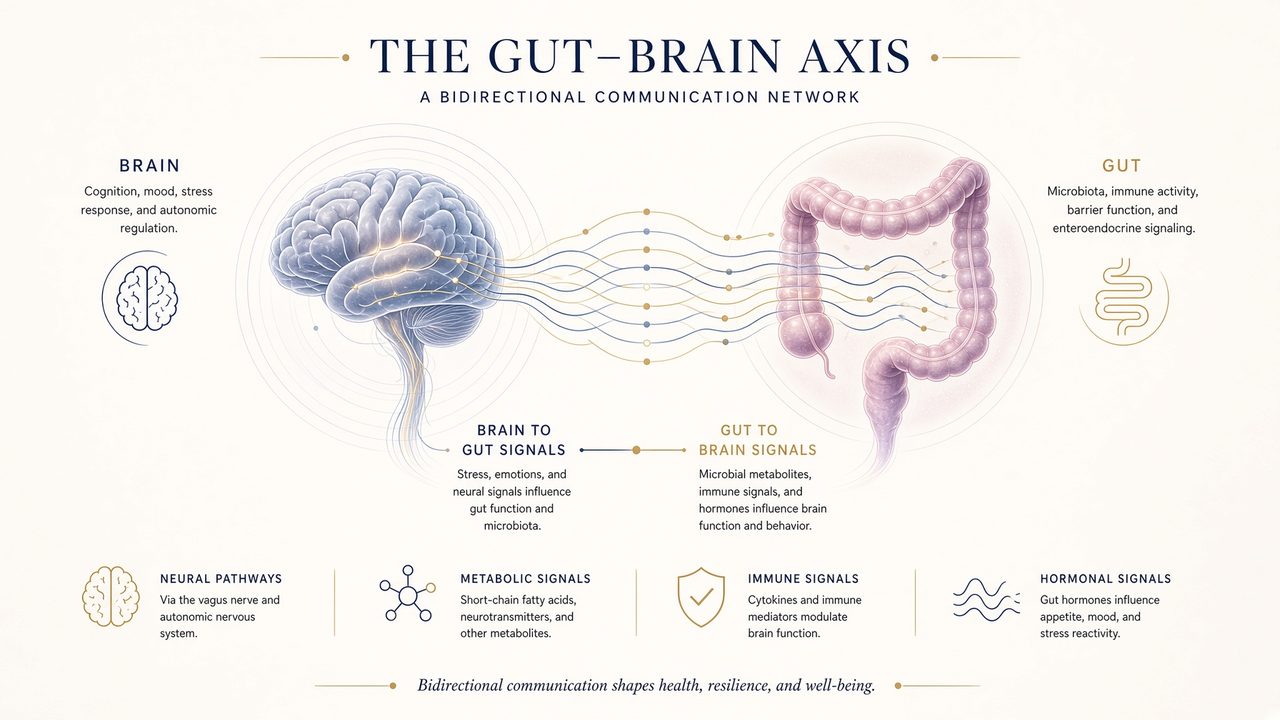
You may feel butterflies before an important event, or lose your appetite when upset. These everyday experiences reflect a two-way communication system between gut and brain, and researchers are exploring whether the gut microbiome influences mood and mental health.
How the gut talks to the brain
- Vagus nerve: carries signals in both directions, with most fibers traveling from gut to brain.
- Enteric nervous system: a network of about 500 million neurons in the gut wall, sometimes called the "second brain," which can operate semi-independently.
- Immune system: gut bacteria shape immune activity, and inflammatory signals can influence the brain.
- Endocrine signaling: gut hormones and the stress axis (HPA) are involved.
- Microbial metabolites: short-chain fatty acids such as butyrate, produced from fiber fermentation, influence gut barrier and brain function. Gut bacteria also affect production of neurotransmitter precursors. Most serotonin in the body is made in the gut, though it does not cross the blood-brain barrier directly.
Evidence from animals
Studies in germ-free mice show altered stress responses and anxiety-like behaviors that change when microbes are introduced. Transferring microbiota from depressed patients to rodents can produce depression-like behavior, suggesting a possible causal role. Findings in animals do not always translate to humans.

Evidence in people
- Associations: people with depression, anxiety and autism have differences in gut microbial composition in some studies, though results are inconsistent and influenced by diet, medications and lifestyle.
- Gut disorders and mood: irritable bowel syndrome (IBS) and inflammatory bowel disease are strongly associated with anxiety and depression, and gut-directed hypnotherapy and CBT help IBS.
- Probiotics: meta-analyses suggest small benefits of some probiotic strains for depressive and anxiety symptoms, but effects are modest, and study quality varies. Probiotics used for mental health purposes are sometimes called "psychobiotics." Optimal strains, doses and populations remain unclear.
- Diet: the SMILES trial in Australia found that a Mediterranean-style diet improved depression scores compared with social support in adults with major depression, though replication is ongoing. Diets high in fiber and fermented foods promote microbial diversity.
- Fecal microbiota transplant: studied in some conditions, with small trials, and is not an established treatment for psychiatric disorders.
- Antibiotics and early life: altered microbiome exposures in infancy are being studied for effects on neurodevelopment.
Practical steps
- Eat a varied, fiber-rich diet: vegetables, fruits, legumes, whole grains and nuts.
- Include fermented foods such as yogurt, kefir, kimchi or sauerkraut if you tolerate them.
- Limit ultra-processed foods, sugar-sweetened drinks and excess alcohol.
- Manage stress, since stress alters gut function.
- Sleep and exercise, which are associated with a healthier microbiome.
- Use antibiotics only when needed.
- Be skeptical of marketing: commercial microbiome tests and supplements often outrun the evidence. Talk with a clinician before using probiotics, particularly if immunocompromised.
- Do not replace treatment: persistent mood or anxiety symptoms should be evaluated professionally.
Takeaway
The gut-brain axis is a fascinating, real communication network. Supporting gut health through diet and lifestyle is reasonable and likely beneficial, though it is not yet a stand-alone treatment for mental illness.
Further reading from authoritative sources
- National Institute of Mental Health (NIMH)
- National Center for Complementary and Integrative Health (NCCIH)
This article is educational and does not replace advice from a licensed clinician. See the medical disclaimer. Looking for specialist care? Browse the neurology clinic directory.