The Neurobiology of Loneliness
Loneliness is the painful feeling that your social connections fall short of what you need. It is distinct from being alone, since people can be lonely in a crowd or content in solitude. Research increasingly treats loneliness as a health issue, with links to cognition, mood and longevity.
A social signal
John Cacioppo, a pioneer in the field, proposed that loneliness evolved to motivate people to repair social bonds, since isolation was dangerous for social animals. Chronic loneliness keeps the alarm on.
Brain systems involved
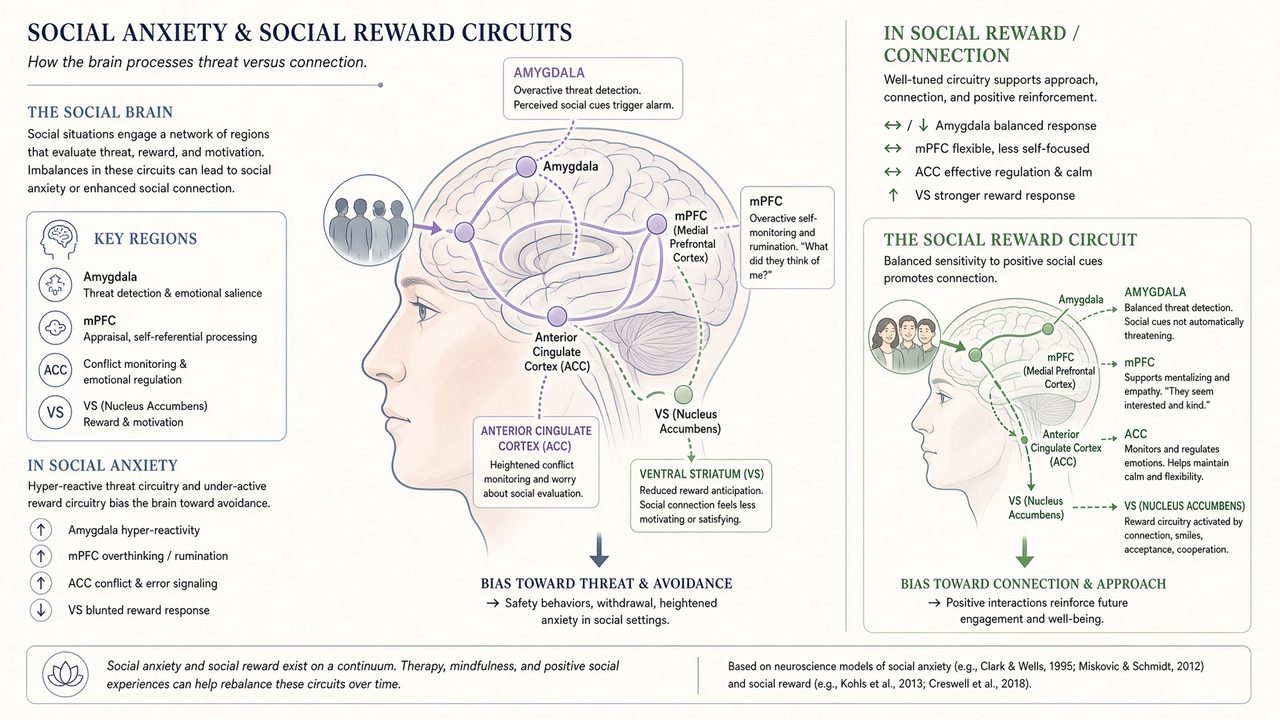
- Social pain overlaps with physical pain. Studies of social exclusion find activity in the anterior cingulate cortex and insula, regions also active in physical pain.
- Reward circuitry. Lonely people may show weaker reward responses in the ventral striatum to social stimuli.
- Threat vigilance. Loneliness is associated with heightened attention to social threats and greater amygdala sensitivity, leading to wariness that can push others away.
- Social cognition networks. Regions including the medial prefrontal cortex and temporoparietal junction are involved in interpreting others, and differences have been observed.
- Default mode network. Some studies link loneliness with stronger default mode network features, perhaps related to a focus on internal thoughts.
Findings come largely from correlational studies, so it is hard to say whether brain differences cause loneliness or result from it.

Effects on the body
Chronic loneliness is associated with elevated stress hormones, increased inflammation, poorer sleep, higher blood pressure and a higher risk of cardiovascular disease. Large analyses estimate that social isolation and loneliness are associated with increased risk of early death comparable to other well-known risk factors, although causality is debated. In 2023, the U.S. Surgeon General issued an advisory calling loneliness and isolation a public health concern.
Effects on mental and cognitive health
Loneliness is linked with depression, anxiety and a greater risk of cognitive decline and dementia in older adults. Mechanisms may include stress, reduced mental stimulation, inactivity and poor sleep.
The loneliness loop
Loneliness can create a cycle: feeling lonely leads to social wariness and withdrawal, which reduces connection, which deepens loneliness. Interventions that address distorted social thinking, in addition to increasing contact, have shown particular promise.
What helps
- Focus on quality as well as quantity. A few meaningful relationships help more than many shallow ones.
- Join structured activities, such as clubs, volunteering, classes or faith communities, which provide repeated contact around a shared interest.
- Reach out in small ways. Short, regular contacts add up.
- Address negative social expectations, with help from cognitive behavioral therapy.
- Care for others. Helping and volunteering can reduce loneliness.
- Pets and nature can offer comfort, though they do not replace human connection.
- Use technology wisely. Video calls can keep ties alive, while passive scrolling often worsens feelings.
- Seek professional help if loneliness comes with persistent sadness or hopelessness.
Special groups
Older adults, new parents, caregivers, people with disabilities, immigrants, students and people who have lost a partner are at heightened risk. Communities and healthcare systems are experimenting with social prescribing, in which clinicians refer patients to community activities.
Takeaway
Loneliness is common, treatable and not a personal failing. Recognizing it as a signal, much like hunger, can motivate steps toward reconnection.
Further reading from authoritative sources
- National Institute of Mental Health (NIMH)
- National Center for Complementary and Integrative Health (NCCIH)
This article is educational and does not replace advice from a licensed clinician. See the medical disclaimer. Looking for specialist care? Browse the neurology clinic directory.