The Science of Emotional Contagion
Walk into a room where everyone is laughing and you start smiling. Sit next to a person who is anxious and you may feel tense. This transfer of emotions, called emotional contagion, is a fundamental feature of social life, and it has biological roots.
How it works
Elaine Hatfield, John Cacioppo and Richard Rapson described emotional contagion as a tendency to automatically mimic and synchronize facial expressions, vocalizations, postures and movements with others, and consequently to converge emotionally. Mechanisms include:
- Mimicry: within a fraction of a second, observers' facial muscles subtly mirror expressions seen on others, measurable with electromyography. Feedback from facial muscles influences emotional experience.
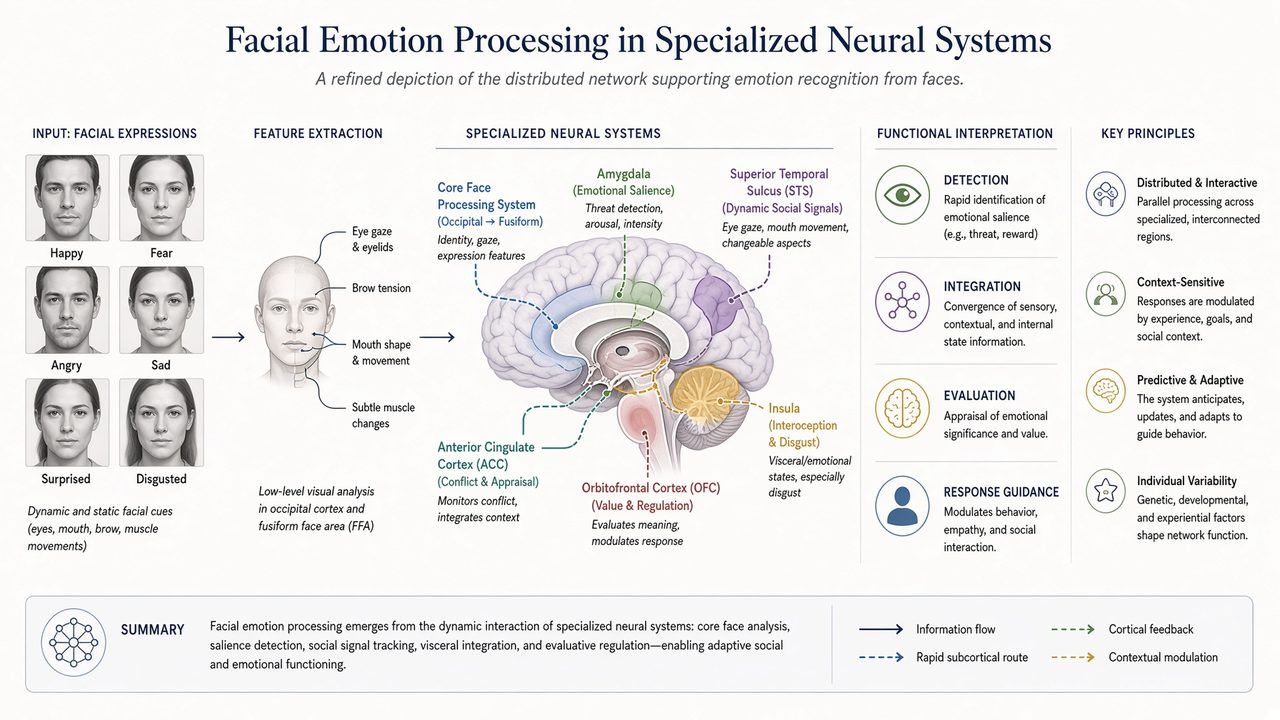
- Mirror and empathy systems: regions such as the inferior frontal gyrus, premotor cortex, anterior insula and anterior cingulate cortex respond both when experiencing an emotion and when watching it in others, supporting emotional resonance, though the exact role of mirror neurons in humans is debated.
- Vocal and bodily cues: tone of voice and posture convey emotion.
- Physiological synchrony: heart rate and skin conductance can synchronize between people, such as in couples or between therapist and client.
- Chemical signals: studies suggest that body odors from frightened people can influence others, though evidence is limited.
Evidence in everyday life
- Infants and children: babies catch the distress of other babies and the moods of caregivers.
- Couples and families: partners' stress and mood levels often influence each other, and parental anxiety can affect children.
- Workplaces: studies of teams found that the leader's mood spreads to others and affects performance, as research by Sigal Barsade shows. Positive moods increase cooperation, while negative moods can spread quickly.
- Health care: clinicians' empathy and stress can influence patients.
- Online: a large Facebook experiment in 2014, by Adam Kramer and colleagues, found that reducing positive posts in users' feeds led them to write slightly fewer positive posts, evidence of contagion on social networks, though effects were small and the study raised ethical concerns. Doomscrolling and exposure to violent news may spread distress.
- Social networks: analyses of the Framingham Heart Study by Nicholas Christakis and James Fowler suggested that happiness clusters in social networks, though the interpretation is debated.

Who is more susceptible
People who are highly empathic, anxious, or who pay close attention to others' emotions tend to catch moods more readily. Closeness, power differences and shared identity influence contagion. People with strong boundaries and emotion regulation skills may be less affected.
Protecting and using contagion
- Notice the transfer: ask whether a feeling is yours or picked up from someone else.
- Regulate your own state: slow breathing, grounding and posture shifts.
- Take breaks from high-intensity environments or people, and set boundaries.
- Choose your information diet: limit repeated exposure to distressing media.
- Spend time with people who lift you, and be a source of calm for others.
- Practice compassion without absorbing distress: compassionate concern, as opposed to empathic distress, is more sustainable.
- Leaders and parents: your emotional tone sets the climate. Model calm and optimism.
- Share positive emotion: smiling, laughter and kindness spread.
Takeaway
Emotions are social. Understanding contagion helps you choose the moods you absorb and the ones you spread.
Further reading from authoritative sources
- National Institute of Mental Health (NIMH)
- National Center for Complementary and Integrative Health (NCCIH)
This article is educational and does not replace advice from a licensed clinician. See the medical disclaimer. Looking for specialist care? Browse the neurology clinic directory.