The Science of Worry: When Anxiety Becomes Chronic
Worry is the mind's attempt to prepare for possible threats. A little of it is useful, but when it becomes constant and uncontrollable, it can develop into generalized anxiety disorder (GAD) and affect sleep, health and relationships.
Normal versus chronic worry
Worry involves verbal, future-focused thoughts about possible negative outcomes. It becomes a disorder when worry is excessive, difficult to control, occurs on more days than not for at least six months and comes with symptoms such as restlessness, fatigue, poor concentration, irritability, muscle tension or sleep disturbance. About 3 to 6 percent of people experience GAD in their lifetime.
What happens in the brain
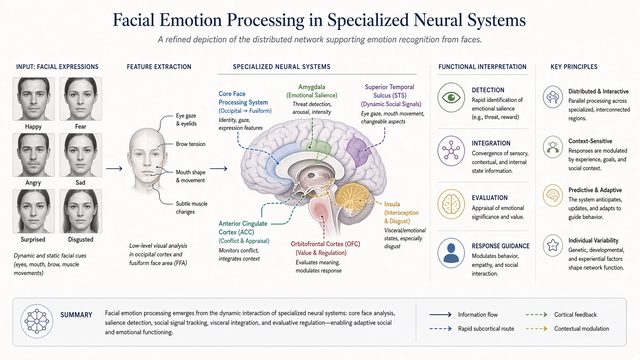
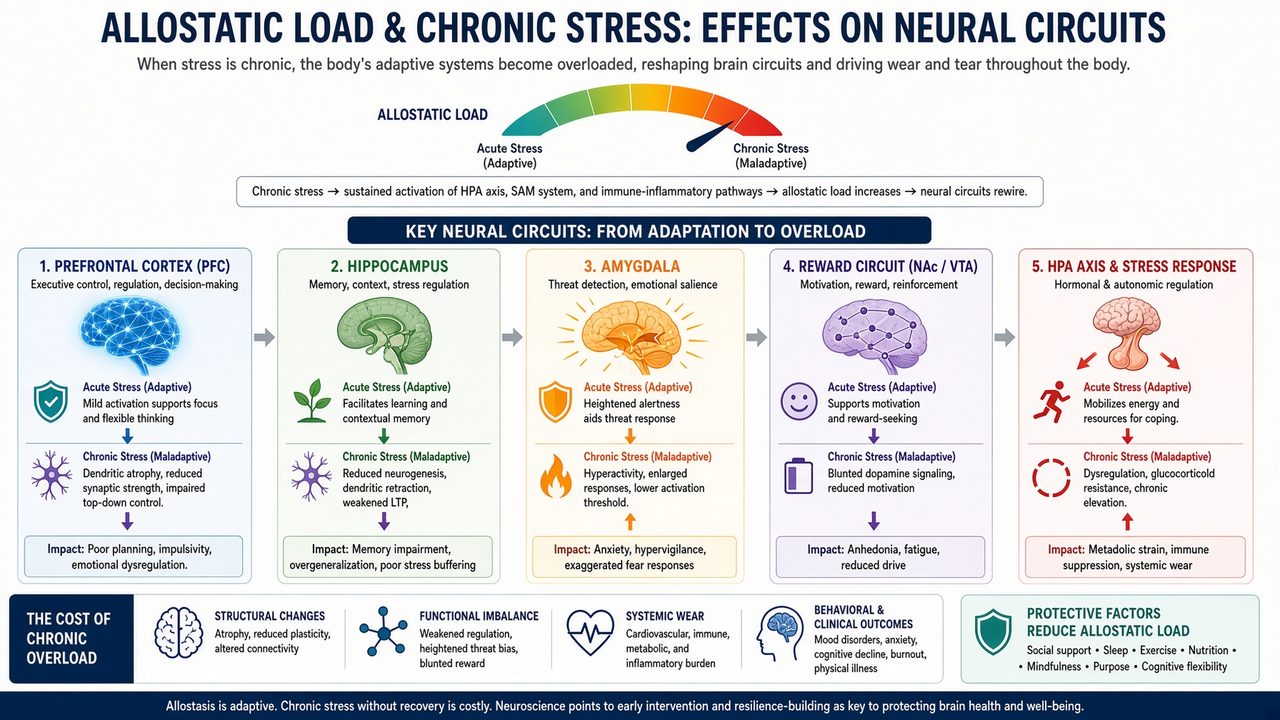
- Amygdala hyperactivity: greater reactivity to uncertain or ambiguous signals.
- Prefrontal cortex: reduced regulatory control. In studies by Amit Etkin and colleagues, patients with GAD showed weaker connectivity between the amygdala and the anterior cingulate cortex, which may limit the ability to dampen anxiety.
- Insula: heightened sensitivity to bodily signals and uncertainty.
- Neurotransmitters: GABA, serotonin and norepinephrine systems are involved, which is why many medications act on them.
- Stress system: HPA axis changes and autonomic arousal contribute.

Why worry persists
Michel Dugas and Robert Ladouceur identified key features:
- Intolerance of uncertainty: a strong discomfort with not knowing.
- Positive beliefs about worry: thinking that it prevents bad things or motivates.
- Negative problem orientation: doubting one's ability to cope.
- Cognitive avoidance: worry in verbal thought can suppress vivid imagery and the physiological discomfort of fear, thereby reinforcing itself, as Thomas Borkovec proposed.
Effects on health
Chronic worry is associated with sleep problems, headaches, digestive complaints, muscle tension and higher cardiovascular risk. It can also co-occur with depression.
Treatments with evidence
- Cognitive behavioral therapy: the most studied treatment. It teaches skills to identify catastrophic predictions, tolerate uncertainty, and use worry exposure and problem solving. CBT produces durable improvement for many patients.
- Medication: SSRIs, SNRIs, buspirone and pregabalin can help. Benzodiazepines are sometimes used briefly, but carry dependence risks and are not generally recommended long term. Medication decisions belong to a clinician.
- Mindfulness-based programs and acceptance and commitment therapy have supporting evidence.
- Applied relaxation: training in progressive muscle relaxation and cue-controlled relaxation.
- Exercise, sleep and limiting caffeine and alcohol, which reduce baseline arousal.
- Biofeedback such as HRV training can support relaxation.
Self-help strategies
- Schedule worry time: set aside 15 to 20 minutes a day, and postpone worries that arise outside that period.
- Sort worries: ask whether a worry is about something you can act on. If so, plan a step. If not, practice acceptance.
- Test predictions: write down feared outcomes and check what actually happened.
- Practice tolerating uncertainty by making small decisions without excessive checking.
- Breathing and grounding when arousal rises.
- Limit news and social media if they feed anxiety.
- Share concerns with a supportive person.
When to seek help
If worry is persistent, interferes with daily life or is accompanied by panic, depression, substance use or thoughts of self-harm, consult a doctor or mental health professional.
Takeaway
Chronic worry is a learned pattern of avoiding uncertainty. Treatment helps the brain learn that it can cope with not knowing.
Further reading from authoritative sources
- National Institute of Mental Health (NIMH)
- National Center for Complementary and Integrative Health (NCCIH)
This article is educational and does not replace advice from a licensed clinician. See the medical disclaimer. Looking for specialist care? Browse the neurology clinic directory.