Biofeedback in Schools: Supporting Student Well-Being
Student anxiety, stress and attention problems are major concerns for educators. Some schools have introduced biofeedback programs that teach students to monitor and regulate their body signals, with promising but still developing evidence.
What it looks like in schools
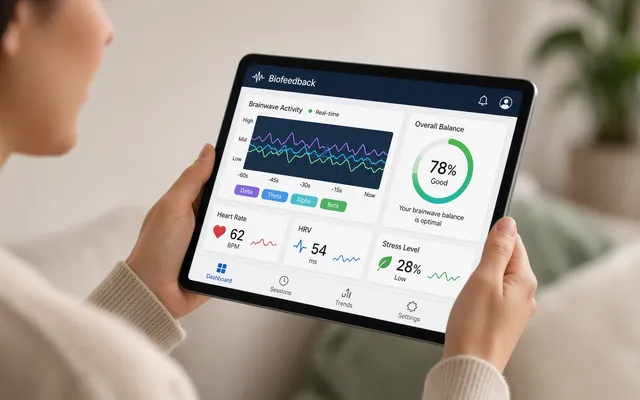
- Heart rate variability and breathing training: students wear a pulse sensor on an ear or finger and watch a screen showing their heart rhythm while practicing slow breathing, often in games where calm breathing moves a character.
- Skin temperature and conductance: students see how their hands warm and sweating decreases as they relax.
- Muscle tension biofeedback for headaches and posture.
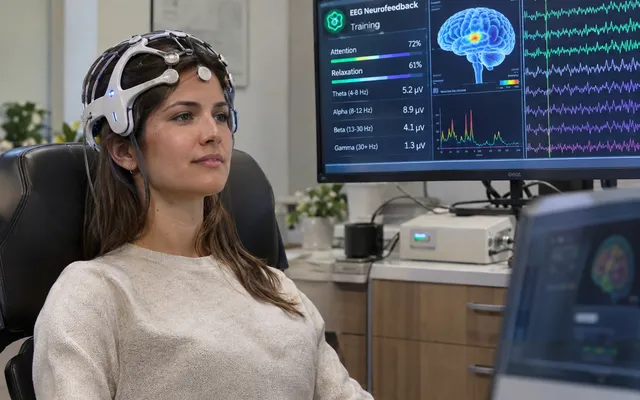
- Neurofeedback: some programs use EEG-based games for attention, though evidence is mixed.
- Wearables and apps that give heart rate feedback.
Sessions are typically brief, around 10 to 20 minutes, in small groups or individually, led by counselors, psychologists, nurses or trained teachers.
What research shows
Studies of heart rate variability biofeedback in students, for example in test anxiety, found reductions in anxiety and improvements in coping. Programs such as the HeartMath-based Test Edge, evaluated by Rollin McCraty and colleagues, reported improvements in test anxiety and in test performance, though many studies are small and not all are randomized. A review of biofeedback for children and adolescents found benefits for anxiety, headaches, asthma, and ADHD in some studies, with variable quality. Trials of neurofeedback for ADHD show smaller effects when blinded outcome measures are used. Researchers recommend more rigorous trials in school settings.
Benefits
- Self-regulation skills: students learn to notice and change physical responses.
- Engagement: games and visual feedback appeal to students.
- Low risk: noninvasive and drug-free
- Complement to counseling: it gives students a concrete tool.
- Test anxiety, performance anxiety and sleep: common targets.
Cautions
- Not a treatment for serious conditions such as severe anxiety, depression or trauma, which require clinical care
- Staff training: trained professionals should run programs
- Privacy and consent: parental consent, secure data, and voluntary participation
- Avoid pressure or stigma
- Equipment cost and equity
- Avoid overclaiming, such as promises of better grades
- Monitoring wellbeing: refer students who show distress
Setting up a program
Start with a pilot, define goals, choose validated equipment, train staff, involve families, track outcomes such as anxiety scores and attendance, and share results. Combine with mindfulness, social and emotional learning and counseling.
Practical tips for students
Practice slow breathing, around five to six breaths per minute, for a few minutes daily, before tests or presentations. Notice shoulders, jaw and hands, and relax them.
Evaluating a school program
Ask what goals the program has, how success is measured, what training staff receive and how student data are protected. Request that students can opt out without penalty. Review results at the end of a semester, and adjust or stop if there is no benefit.
Teachers and staff
Teachers can use the same breathing practices themselves. A calm adult sets the tone for a calm classroom, and short whole-class breathing breaks can help everyone refocus after lunch or recess.
Takeaway
Biofeedback gives students a window into their own bodies. Used thoughtfully, it can be one tool among many for school wellbeing.
Further reading from authoritative sources
- National Institute of Mental Health (NIMH)
- National Institute of Neurological Disorders and Stroke (NINDS)
- National Center for Complementary and Integrative Health (NCCIH)
This article is educational and does not replace advice from a licensed clinician. See the medical disclaimer. Looking for specialist care? Browse the neurology clinic directory.