Neurofeedback and Aging: Maintaining Brain Health
Neurofeedback is a form of biofeedback that displays brain activity, usually from EEG sensors, so a person can learn to shift it. Researchers are exploring whether it can support cognition in older adults, though the evidence is still developing.
How it works
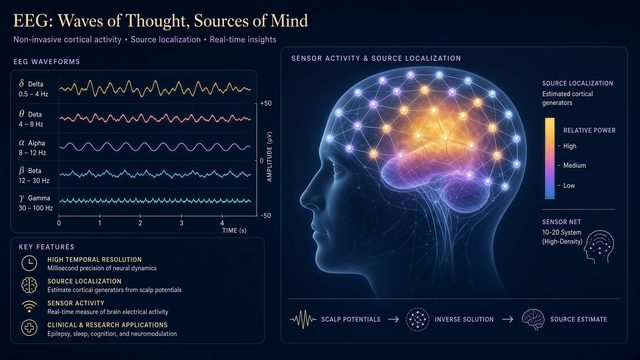
Sensors on the scalp record electrical brain activity. Software extracts a feature, such as the strength of alpha, theta or sensorimotor rhythm, and converts it into a visual or auditory cue. When the brain produces a target pattern, the participant receives positive feedback, such as a brighter picture or a pleasant sound. Over sessions, the brain may learn through operant conditioning to produce the pattern more often, a form of self-regulation. Real-time fMRI neurofeedback is used in research.
What studies in older adults show
- Memory: a study by Wolfgang Klimesch and colleagues in Austria found that training the upper alpha band improved working memory in older adults in some experiments. Other studies of alpha and theta training report gains in memory tasks in healthy older adults and in those with subjective cognitive complaints.
- Attention and executive function: small trials show improvements in attention, reaction time or processing, but control groups and blinding vary.
- Mild cognitive impairment: a few small randomized studies report cognitive improvements and changes in EEG, though samples are small and follow-up is limited.
- Sleep and mood: neurofeedback and related biofeedback approaches have been explored for insomnia and depression in older adults, with mixed results.
- Limitations: many trials lack sham controls, are underpowered and use different protocols. A significant placebo effect may exist, because expectations influence performance. Reviews generally call for larger, rigorous trials.

Safety and cost
Neurofeedback is noninvasive, and side effects are usually mild, such as fatigue, headache or temporary irritability. Treatments typically involve many sessions over weeks, and costs can be high and are not always covered by insurance.
Choosing a provider
- Look for credentials, such as certification from the Biofeedback Certification International Alliance, and a licensed health professional.
- Ask about evidence for the condition being treated.
- Be wary of claims that neurofeedback cures or prevents Alzheimer's disease.
- Ask about a medical evaluation first, because memory complaints need a proper diagnosis.
- Set goals and measure progress with objective tests.
- Check the number and cost of sessions and policies.
- Do not stop medical treatment.
Complementary habits
Neurofeedback works best alongside the basics: exercise, good sleep, social engagement and cognitive challenge. If memory is a concern, talk with a physician about proper evaluation.
A realistic expectation
If you try neurofeedback, think of it as a skill-training experiment. Record a baseline of how you feel and perform, review progress after several weeks, and stop if you see no meaningful change. Because effects of expectations can be strong, objective tests are helpful, and a neuropsychologist can provide them. Bring results back to your physician.
Takeaway
Neurofeedback is an intriguing approach for the aging brain, but it is still experimental for cognition. Treat it as an adjunct, and choose providers carefully.
Further reading from authoritative sources
- National Institute on Aging (NIA)
- National Institute of Neurological Disorders and Stroke (NINDS)
- National Center for Complementary and Integrative Health (NCCIH)
This article is educational and does not replace advice from a licensed clinician. See the medical disclaimer. Looking for specialist care? Browse the neurology clinic directory.