Multiple Sclerosis and Brain Health
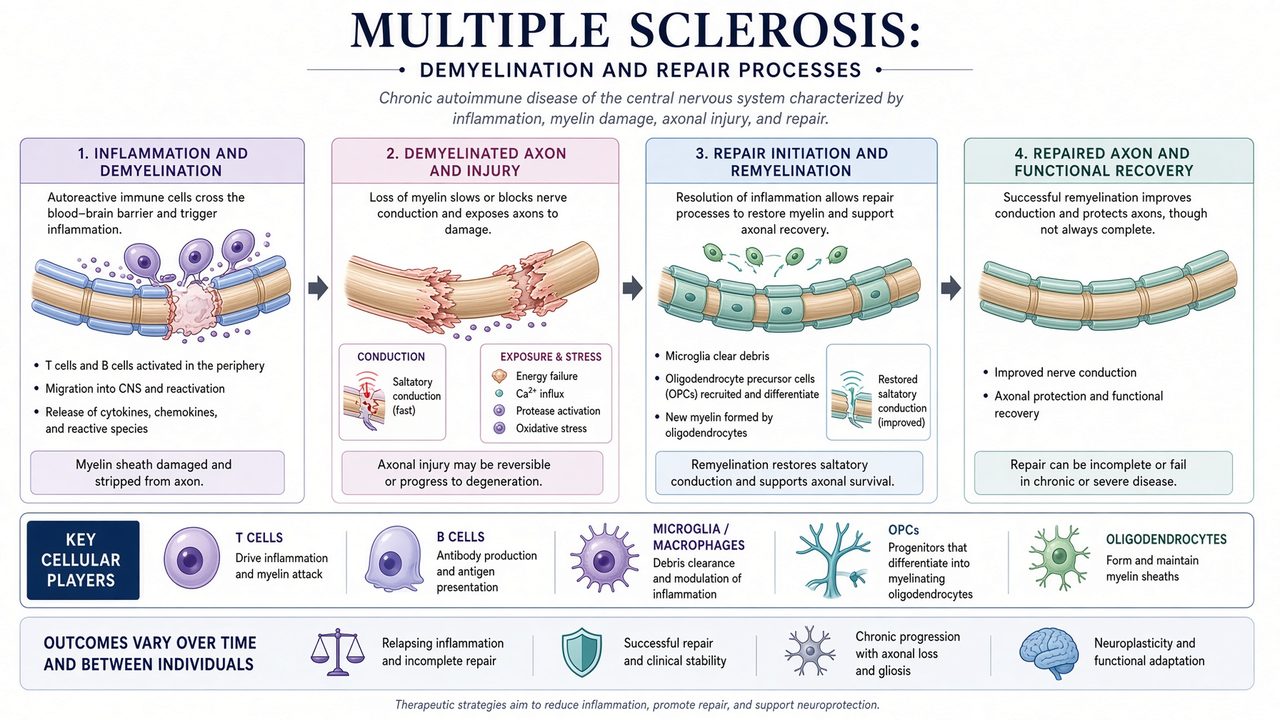
Multiple sclerosis, or MS, occurs when the immune system attacks the myelin sheath that insulates nerve fibers in the central nervous system. It is one of the most common causes of neurological disability in young adults, and treatments have transformed the outlook over recent decades.
What happens in the brain
Immune cells, including T cells and B cells, cross the blood-brain barrier and attack myelin and the oligodendrocytes that make it. This produces inflamed lesions in the brain, optic nerves and spinal cord, which slow or block signal conduction. Remyelination can occur but is often incomplete, and over time, axons degenerate and brain volume declines, which is thought to drive long-term disability. Microglia and smoldering inflammation contribute to progression.
Symptoms
MS is highly variable:
- Vision problems such as optic neuritis, with pain on eye movement and blurred vision
- Numbness, tingling, weakness
- Balance and walking difficulties
- Fatigue, which is among the most common and disabling
- Bladder and bowel problems
- Cognitive changes, affecting processing speed, memory and attention in up to half of people
- Depression and anxiety
- Heat sensitivity that temporarily worsens symptoms

Types
Most people begin with relapsing-remitting MS, with attacks followed by recovery. Some later develop secondary progressive MS, and about 10 to 15 percent have primary progressive MS, with steady worsening from the start.
Causes and risk factors
Genetics contributes, with HLA genes among the strongest, but MS is not directly inherited. Environmental factors include low vitamin D and low sun exposure, smoking, obesity in adolescence and infection with Epstein-Barr virus. A large 2022 study in Science led by Alberto Ascherio's team at Harvard found that EBV infection greatly increases the risk of MS, supporting a causal link. MS is more common in women and in places farther from the equator.
Diagnosis
Diagnosis uses clinical history, neurological exam, MRI showing lesions in typical locations and sometimes spinal fluid tests and evoked potentials. The McDonald criteria guide diagnosis.
Treatment
- Disease-modifying therapies: more than a dozen are available, including interferons, glatiramer, oral drugs such as dimethyl fumarate and teriflunomide, and infusion therapies such as ocrelizumab, natalizumab and ofatumumab. They reduce relapses and new lesions, and high-efficacy therapies early are increasingly used.
- Relapse treatment: short courses of corticosteroids.
- Symptom management: medication for fatigue, spasticity, bladder issues and pain, plus rehabilitation.
- Cognitive rehabilitation and exercise.
- Mental health care.
Lifestyle for brain health
- Exercise: improves fatigue, mobility and possibly cognition.
- Do not smoke.
- Keep vitamin D adequate, through medical advice on testing and supplements.
- Eat a balanced diet, though no specific diet is proven.
- Manage stress and sleep.
- Stay vaccinated, with guidance from your neurologist, since some therapies affect vaccine choices.
- Stay cool during hot weather.
Living well with MS
Many people continue working and raising families. Pacing activity, using cooling vests in heat, scheduling rest and building an MS care team of neurologist, rehabilitation specialists and mental health professionals all help. Report new or worsening symptoms promptly, since they may signal a relapse or a need to change treatment.
Takeaway
MS is a lifelong condition, but earlier diagnosis and effective therapies allow many people to live full lives. Work with a neurologist who specializes in MS.
Further reading from authoritative sources
This article is educational and does not replace advice from a licensed clinician. See the medical disclaimer. Looking for specialist care? Browse the neurology clinic directory.