Biofeedback for Anxiety: A Drug-Free Path to Calm
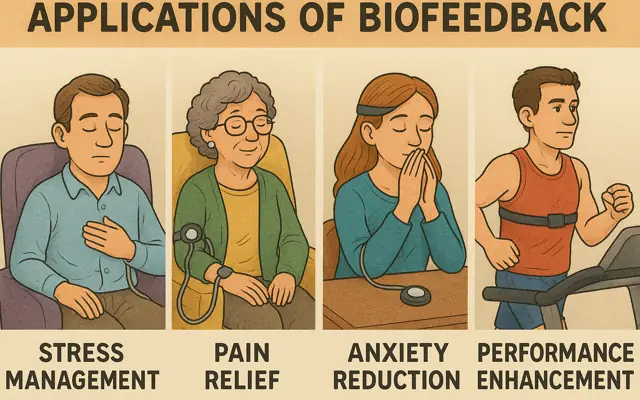
Anxiety shows up in the body as well as the mind: a racing heart, tight muscles, shallow breathing, cold or sweaty hands. Biofeedback uses sensors to display these processes in real time so you can learn to change them. Because it relies on skills rather than medication, many people find it an appealing option, either alone or alongside other care.
How it works
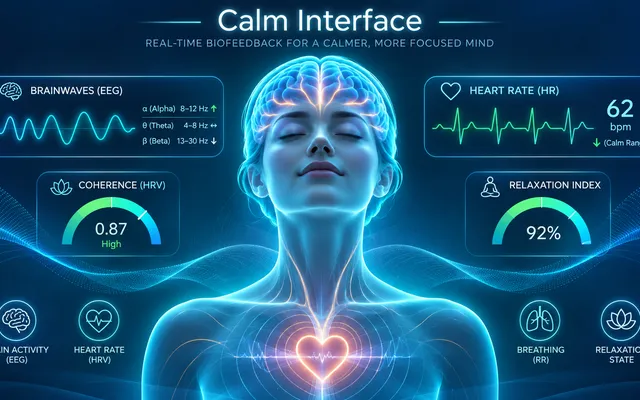
When you see your heart rate, breathing or muscle activity on a screen, you can experiment with strategies, such as slow breathing, muscle relaxation or shifting attention, and see immediately which ones work. With practice, you learn to recognize the early signs of tension and to reduce them without needing the device.
Common methods used for anxiety
Heart rate variability biofeedback
A pulse sensor tracks small changes in the time between heartbeats. Slow, rhythmic breathing, often around six breaths per minute, increases the heart-rate pattern linked to relaxation. People watch a graph of their heart rhythm and learn to match their breathing to it.
Respiratory biofeedback
Sensors on the chest and abdomen display breathing pattern. Because overbreathing is common in anxiety and panic, learning slower, diaphragmatic breathing can reduce symptoms.
Electromyography (EMG)
Surface sensors measure muscle tension in areas such as the forehead and neck, helping people learn progressive relaxation.
Thermal and electrodermal feedback
Finger temperature tends to drop and skin conductance to rise with stress. Seeing these signals helps connect emotions with body responses.
Neurofeedback
Some practitioners use EEG feedback for anxiety. The evidence is less established than for other types and varies among protocols.
What the research says
Several reviews report that biofeedback, especially heart rate variability biofeedback, is associated with reductions in anxiety symptoms, with small to moderate average effects. Results are encouraging, but many studies are small and use differing methods, and it can be hard to separate the effect of the feedback from the effect of relaxation skills, attention from a clinician, and expectations. For these reasons, biofeedback is generally regarded as a helpful complementary approach rather than a first-line replacement for therapies with stronger evidence, such as cognitive behavioral therapy.
Biofeedback with other treatments
Biofeedback pairs naturally with psychotherapy. Sensing the body's early signals of anxiety can help a person use cognitive and behavioral strategies sooner. If you take medication, continue it unless your prescriber advises otherwise; biofeedback is not a reason to stop treatment on your own.
What to expect
A course usually involves weekly sessions over several weeks. You will practice techniques in the office and at home, often for ten to twenty minutes a day. Progress is typically tracked with symptom questionnaires and physiological measures.
Home devices
Wearables and apps can display heart rate or guide breathing and can support practice. Consumer devices vary in accuracy, and their data should not be used to diagnose anything. A professional can help you use them well.
Who should be cautious
People with certain heart conditions, breathing disorders or panic that is triggered by attention to bodily sensations should work with a clinician. Some people with panic disorder find focusing on their breath initially uncomfortable, and a gradual approach helps.
Finding a practitioner
Choose a licensed clinician, such as a psychologist, counselor, nurse or physician, who has additional training or certification in biofeedback. Ask about their approach, expected results and how progress will be measured.
The takeaway
Biofeedback can help you build practical skills for calming the body and mind. For many people it is a useful part of a broader plan that also includes healthy routines and, when needed, therapy or medication.
Further reading from authoritative sources
- National Institute of Mental Health (NIMH)
- National Center for Complementary and Integrative Health (NCCIH)
This article is educational and does not replace advice from a licensed clinician. See the medical disclaimer. Looking for specialist care? Browse the neurology clinic directory.