The Endocannabinoid System and Brain Health
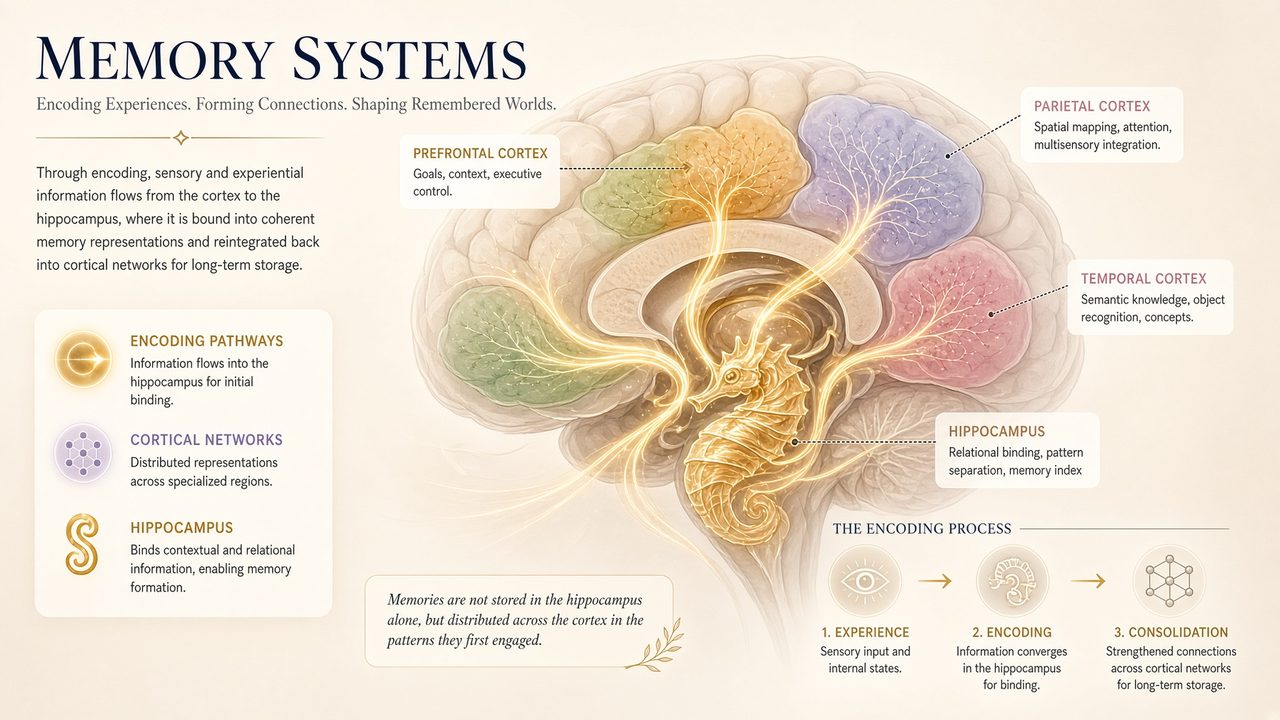
Long before the discovery of the endocannabinoid system, people used cannabis for its effects. Scientists then identified a natural signaling network in the body that responds to compounds similar to those in the plant, and it turns out to be one of the brain's key regulators.
What it is
The endocannabinoid system (ECS) comprises:
- Receptors: CB1 receptors, abundant in the brain, especially the hippocampus, amygdala, basal ganglia, cerebellum and prefrontal cortex; and CB2 receptors, mainly on immune cells, with some in the brain.
- Endocannabinoids: the body's own signaling molecules, including anandamide (named from the Sanskrit "ananda," bliss) discovered by Raphael Mechoulam and colleagues, and 2-arachidonoylglycerol (2-AG).
- Enzymes: FAAH breaks down anandamide, and MAGL breaks down 2-AG.
Unlike classical neurotransmitters, endocannabinoids are made on demand by postsynaptic neurons and travel backward across the synapse to dampen release of neurotransmitters, so they act as a brake or fine tuner.
Functions
- Stress and anxiety: the ECS helps terminate stress responses, and low anandamide signaling is associated with heightened anxiety and impaired fear extinction in some studies.
- Mood: altered endocannabinoid signaling is implicated in depression models.
- Memory: supports extinction of aversive memories and forgetting of irrelevant information.
- Pain, inflammation and immunity
- Appetite and metabolism: the CB1 blocker rimonabant reduced weight but caused anxiety and depression, and was withdrawn.
- Sleep, reward and neuroprotection
Exercise and the ECS
Researchers, including Johannes Fuss and Matthew Hill, have found that endocannabinoid levels, particularly anandamide, rise after aerobic exercise, and may contribute to the mood lift, reduced anxiety and pain relief called the "runner's high." Studies suggest that endorphins alone cannot explain the effect because they do not easily cross the blood-brain barrier, though research is ongoing.
Diet and lifestyle
Omega-3 and omega-6 fatty acids are precursors of endocannabinoids, so dietary fat composition may affect signaling, though human evidence is limited. Chronic stress, sleep loss and obesity may alter ECS tone. Social interaction, laughter and sex may engage the system as well.
Cannabis and cannabinoids
- THC: the main psychoactive compound in cannabis, activates CB1 receptors more strongly and persistently than natural endocannabinoids, which can impair memory and attention and produce anxiety or psychosis in vulnerable people. Heavy adolescent use is associated with greater risk of problems with cognition and psychosis. Regular use can cause dependence, in about 10 percent of users, and a cannabis hyperemesis syndrome in some.
- CBD: a non-intoxicating compound that does not act strongly on CB1. The FDA has approved a purified CBD medicine, Epidiolex, for certain severe epilepsies. Evidence for anxiety, sleep and pain is preliminary, and many commercial CBD products are poorly regulated and inconsistently labeled.
- Medical cannabinoids: approved drugs include dronabinol and nabilone for chemotherapy-related nausea, and nabiximols (available in some countries) for spasticity in multiple sclerosis.
- Research directions: drugs that inhibit FAAH to raise anandamide are being studied, though a FAAH inhibitor trial in 2016 ended in tragedy because of a different compound's off-target effects, and others have shown limited benefit in trials.
Practical points
- Regular aerobic exercise is an accessible way to engage the ECS.
- Talk with a doctor before using cannabis or CBD products, particularly if you take other medications, are pregnant or have a history of psychosis, anxiety or substance use.
- Avoid driving after using cannabis.
- Avoid unregulated products.
Takeaway
The endocannabinoid system is a master regulator of balance in the brain. Understanding it clarifies why exercise feels good and why cannabis affects mood and memory.
Further reading from authoritative sources
- National Institute of Mental Health (NIMH)
- National Center for Complementary and Integrative Health (NCCIH)
This article is educational and does not replace advice from a licensed clinician. See the medical disclaimer. Looking for specialist care? Browse the neurology clinic directory.