The Neuroscience of Motivation and Apathy
Why do we start some tasks eagerly and put off others? And why do some people lose the drive to do almost anything? Neuroscience links motivation to specific circuits, and its loss, known as apathy, has recognizable causes and treatments.
How motivation works
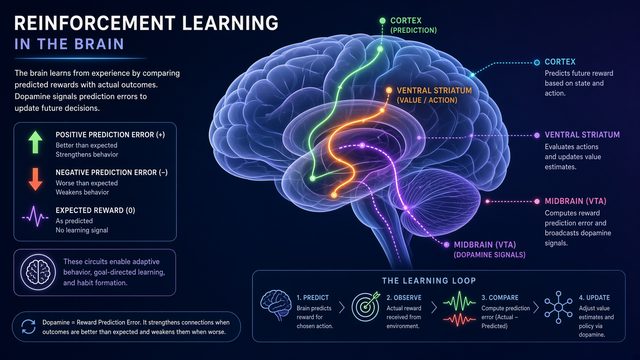
- Dopamine: released in the mesolimbic and mesocortical pathways, it signals reward prediction and the value of effort, not simply pleasure. In research by Wolfram Schultz, dopamine neurons respond to cues predicting reward and to prediction errors. Studies in humans, including work by Masud Husain, suggest that dopamine influences willingness to expend effort for rewards.
- Ventral striatum (nucleus accumbens): assigns value and drives approach.
- Anterior cingulate cortex: weighs effort and cost against benefit, and supports persistence.
- Prefrontal cortex: sets goals, plans and maintains them.
- Insula and amygdala: contribute emotional and bodily signals.
- Other systems: serotonin, noradrenaline and opioid signaling also play roles.
What affects motivation
Sleep, stress, physical health, inflammation, nutrition, mood and meaning all influence drive. Clear goals, a sense of autonomy, competence and relatedness, as described in self-determination theory by Edward Deci and Richard Ryan, support intrinsic motivation. Overly controlling environments and constant external rewards can reduce it.

Apathy
Apathy is a reduction in goal-directed behavior, interest and emotional response. It differs from sadness: a person with apathy may not feel sad, just indifferent. Apathy is common in:
- Neurodegenerative diseases: Alzheimer's disease, frontotemporal dementia, Parkinson's disease and Huntington's disease.
- Stroke and brain injury, especially involving frontal-basal ganglia circuits.
- Depression, where it overlaps with anhedonia, the loss of pleasure.
- Schizophrenia (negative symptoms).
- Medication effects: some antidepressants such as SSRIs can cause emotional blunting in some people, and other medications may reduce drive.
- Medical conditions: thyroid disorders, anemia, sleep apnea and chronic illness.
Apathy burdens families, who may misread it as laziness. It is associated with poorer outcomes and faster decline in some diseases.
Assessment and treatment
A clinician can evaluate apathy by reviewing medications, screening for depression, medical causes and cognitive impairment. Treatments include:
- Addressing underlying causes: treat medical problems, adjust medication, improve sleep.
- Behavioral activation and structured routines: scheduling activities, breaking tasks into small steps, and providing prompts and rewards.
- Exercise and social engagement
- Cognitive rehabilitation and occupational therapy
- Medications: cholinesterase inhibitors in Alzheimer's disease have shown modest benefit on apathy, and methylphenidate has shown benefit in trials, including a trial in Alzheimer's disease. Such medications are decided by a doctor.
- Brain stimulation: under investigation.
Boosting everyday motivation
- Set specific, small goals and make the first step easy.
- Link tasks to values and meaning.
- Use rewards and track progress.
- Build routines that reduce the need for willpower.
- Seek social accountability.
- Move your body and get light and sleep.
- Reduce overwhelm by tackling one thing at a time.
- Talk to a clinician if loss of drive is persistent or marked, since it can signal a treatable condition.
Takeaway
Motivation is a brain function with identifiable circuits, and apathy is a symptom, not a character flaw. Understanding it opens the door to practical and medical help.
Further reading from authoritative sources
- National Institute of Mental Health (NIMH)
- National Center for Complementary and Integrative Health (NCCIH)
This article is educational and does not replace advice from a licensed clinician. See the medical disclaimer. Looking for specialist care? Browse the neurology clinic directory.